China’s Role in Ensuring Future Food Security
China’s Role in Ensuring Future Food Security
Like many other economies around the world, China’s economy is also feeling the impact of climate change. In recent months, storms, droughts, floods, and heatwaves have disrupted food supply chains, damaged crops, and driven up the cost of staple foods. These events pose a threat to China’s food security and reveal a larger issue: climate change is destabilizing agricultural systems worldwide.
In hosting the 2024 World AgriFood Innovation Conference this October, China has spotlighted the urgent need for global food security and agricultural resilience. Bringing together leaders, scientists, and entrepreneurs from around the world, the event highlighted China’s leadership in agricultural innovation and its potential to foster global partnerships to build climate-resilient food systems.
At this crucial time, China has the opportunity not only to secure its own food future but also to play a leading role in addressing global agricultural challenges. By investing in scientific research and development and strengthening South-South cooperation, China can shape the future of agriculture to benefit both its domestic and global food security.

China’s recent experiences with extreme weather underscore the urgent need for resilient agricultural systems. Rising food prices and threats to rural livelihoods also present challenges to China’s rural revitalization initiatives, which are a key part of its development strategy. This strategy focuses not only on infrastructure but also on ensuring rural communities can thrive in a world where climate change is an ongoing threat.
Similar challenges are unfolding across Africa, which holds 60 percent of the world’s remaining arable land. However, Africa’s agricultural potential is increasingly at risk due to severe droughts, soil degradation, and extreme weather. By 2030, an estimated 118 million people in Africa will face droughts, floods, and extreme heat. The stability of African food systems will have wide-reaching effects on global markets and food security, impacting countries like China, which imports significant quantities of food.
In this context, China’s experience and leadership in agricultural modernization are vital. Having transformed its own agricultural sector, China is well-positioned to help the world develop resilient, climate-adapted food systems. Through South-South cooperation and partnerships with institutions like the Consultative Group on International Agricultural Research (CGIAR), the world’s largest agricultural innovation network, China can support Africa’s agricultural transformation while also securing its own food future.
China’s own agricultural success offers valuable lessons for the future, both for itself and globally. In the mid-20th century, China faced widespread food insecurity. However, by leveraging technologies to create high-yield crop varieties and applying advanced irrigation techniques, China quickly boosted its agricultural productivity.
Partnerships with international research organizations like the CGIAR contributed to this transformation. Since China began collaborating with CGIAR in 1984, the partnership has yielded major agricultural advances, particularly in wheat and corn production. Joint research initiatives helped increase China’s wheat output by 10.7 million tons (worth approximately $3.23 billion) through the development of disease-resistant crops and improved farming practices.
Over the decades, these innovations have not only enhanced China’s food security but also lifted millions of people out of poverty in rural areas. The strategies that drove this transformation—investing in R&D, modernizing rural infrastructure, and adopting climate-smart technologies—are applicable today to meet global agricultural challenges. As climate change intensifies, the need for resilient agricultural systems becomes even more critical.
In a world increasingly affected by climate change, the future of agriculture depends on ongoing research and innovation. Drought-resistant crops, sustainable farming practices, and efficient water use are essential to ensuring that food systems can endure climate shocks. Here, China’s collaboration with CGIAR remains vital.
In July 2024, CGIAR and the Chinese Academy of Agricultural Sciences agreed to expand their partnership to enhance agricultural research. This collaboration focuses on improving crop genetic resources and sharing climate-smart agricultural technologies. These innovations will not only benefit China but also support other nations facing similar challenges, especially in Africa.
As the world’s largest developing country and a leader in agricultural innovation, China has the potential to help build resilient food systems across the Global South. South-South cooperation, especially with African nations, can support Africa’s modernization of its food systems and its adaptation to climate change.
Africa’s agricultural future is significant not only for African countries but also for the global community. The continent has the potential to become a major global food producer. However, this potential may go unrealized without significant investment in R&D and technology. China has already committed 360 billion yuan to African development, with a focus on agricultural modernization, industrialization, and green growth. Such investments are essential to strengthen Africa’s food systems, which will have a stabilizing effect on global food markets.
The future of global food security, including China’s, relies on sustained collaboration and investment in agricultural R&D. According to the Ceres2030 report, doubling global investment in R&D is essential to sustainably meet the world’s food needs. With its advanced research capabilities and strong agricultural foundation, China is well-positioned to lead these efforts.
Historically, agricultural innovation has delivered high returns. For example, CGIAR research has consistently provided a 10:1 return on investment. By investing in R&D and partnering with CGIAR, China can protect its food supply and help create more resilient food systems in vulnerable regions, such as Africa.
As the world confronts the intertwined challenges of climate change and food insecurity, China has a pivotal role to play. The recent World AgriFood Innovation Conference provided an opportune moment for China to showcase its leadership in agricultural innovation and expand its partnerships with R&D experts like CGIAR. Through investment in agricultural research, strengthened South-South cooperation, and a commitment to innovation, China can help secure a stable food future for itself—and the world.
Today’s unprecedented advancements in science equip us with tools and knowledge to achieve development goals at previously unimaginable speeds. Breakthroughs in biotechnology, artificial intelligence, and climate-smart agriculture allow us to bypass slower traditional pathways and directly implement solutions once beyond reach. With these advancements, we can tackle global challenges more effectively than ever. Now is the time to leverage these innovations to accelerate development, particularly in Africa, creating immediate, tangible benefits for communities worldwide and setting new standards for sustainable, inclusive growth.
------

------
China can help ensure future food security
Like the economies of other countries across the planet, China's economy, too, is feeling the sting of climate change. In recent months, the country has seen storms, droughts, floods and heat waves that have damaged crops, disrupted food supply chains, and led to higher prices for staple foods. These events threaten China's food security and highlight a broader reality: climate change is undermining agricultural systems worldwide.
By hosting the 2024 World AgriFood Innovation Conference in October, China put the focus on global food security and agricultural resilience could not be more timely. With leaders, scientists and entrepreneurs from around the world in attendance, the event showcased not only China's leadership in agricultural innovation, but also its opportunities for global partnerships in building climate-resilient food systems.
At this critical juncture, China has the opportunity to not just secure its own food future, but to lead globally in addressing agricultural challenges. By investing in scientific research and development — and strengthening South-South cooperation — China can help shape the future of agriculture in a way that strengthens both its own and global food security.
China's recent experience of extreme weather is a powerful reminder of the urgent need for more resilient agricultural systems. Rural livelihoods are under threat, and food prices are rising. This presents a challenge to China's rural vitalization efforts, a central pillar of the country's development strategy. Rural vitalization is not just about building infrastructure; it's also about ensuring that rural communities can thrive in a world where climate change is an ever-present threat.
The same challenges are being faced on a larger scale in Africa, home to 60 percent of the world's remaining arable land. Yet Africa's agricultural potential is increasingly at risk due to severe droughts, soil degradation and extreme weather patterns. By 2030, an estimated 118 million extremely poor people in Africa will be exposed to droughts, floods and extreme heat. The stability of Africa's food systems will have far-reaching effects on global markets and food security, including on China, which imports a significant amount of food.
In this context, China's experience and leadership in agricultural modernization are critical. Having transformed its own agricultural sector, China is well-positioned to help the world develop resilient, climate-adapted food systems. Through South-South cooperation and partnerships with institutions like Consultative Group on International Agricultural Research — the world's largest global agricultural innovation network — China can support Africa's agricultural transformation while helping secure its own food future.
China's own agricultural success story offers important lessons for both its own future and that of the world. In the mid-20th century, China struggled with widespread food insecurity. However, by using technologies to develop and grow high-yielding crop varieties and employing advanced irrigation techniques, China rapidly increased its agricultural productivity.
Contributing to this transformation were partnerships with international research bodies like the CGIAR. Since China formally partnered with the CGIAR in 1984, the collaboration has led to major agricultural advancements, particularly in wheat and corn production. Joint research helped increase China's wheat output by 10.7 million tons (worth 23 billion yuan or $3.23 billion) by developing disease-resistant varieties and implementing farming practices such as reduced tillage and water efficiency.
Over the decades, China's innovations have not only enhanced its food security but also lifted millions of people out of poverty in rural areas. The strategies that drove this — investing in R&D, modernizing rural infrastructure and embracing climate-smart technologies — are directly applicable to meet the challenges facing global agriculture today. As climate change intensifies, the need for resilient agricultural systems gets greater.
In an era of climate change, the future of agriculture depends on research and innovation. Drought-resistant crops, sustainable farming practices, and efficient water use are critical for ensuring that food systems can withstand climate shocks. This is where China's collaboration with the CGIAR continues to play a vital role.
In July 2024, the CGIAR and the Chinese Academy of Agricultural Sciences agreed to expand their cooperation in agricultural research. This partnership focuses on improving crop genetic resources and sharing climate-smart agricultural technologies. These innovations will not only benefit China but also support other nations facing similar challenges, especially in Africa.
As the world's largest developing country and a leader in agricultural innovation, China has the opportunity to help build resilient food systems across the Global South. South-South cooperation, particularly with Africa, can support African nations as they modernize their food systems and adapt to climate change.
Africa's agricultural future is important for the African countries as well as the rest of the world. The continent holds vast potential to become a global food powerhouse. But without investment in R&D and technology, this potential may never be realized. China has already pledged 360 billion yuan to African development, focusing on agricultural modernization, industrialization and green development. These investments are critical for securing Africa's food systems, which in turn will have a stabilizing effect on global food markets.
The future of food security, both in China and globally, depends on continued collaboration on, and investment in, agricultural R&D. The Ceres2030 report emphasizes the need to double that investment globally to sustainably meet the world's food needs. China, with its advanced research capabilities and strong agricultural base, is well-positioned to lead this charge.
Agricultural innovation has historically delivered high returns. The CGIAR's research, for example, has consistently provided a 10:1 return on investment. By investing in R&D and partnering with the CGIAR, China can protect its own food supply as well as help build more resilient food systems in vulnerable regions such as Africa.
As the world faces the intertwined challenges of climate change and food insecurity, China has a pivotal role to play. The recent WAFI Conference offered a timely opportunity for China to showcase its leadership in agricultural innovation and to expand its partnerships with R&D experts like the CGIAR. By investing in agricultural research, strengthening South-South cooperation, and embracing innovation, China can ensure a secure food future for itself — and for the world.
Today, science has advanced to unprecedented levels, equipping us with the tools and knowledge to pursue development at a pace unimaginable before. Breakthroughs in fields such as biotechnology, artificial intelligence, and climate-smart agriculture enable us to bypass traditional, slower pathways and directly implement solutions that were previously out of reach. With these advancements, we can address global challenges faster and more effectively than ever before. Now is the time to harness these innovations to boost development, particularly in Africa, accelerating progress in ways that create immediate, tangible impacts for communities worldwide and set new standards for sustainable, inclusive growth.
---
Ismahane Elouafi is executive managing director of the CGIAR; and Lindiwe Majele Sibanda is system board chair of the CGIAR.
The views don't necessarily reflect those of China Daily.
If you have a specific expertise, or would like to share your thought about our stories, then send us your writings at opinion@chinadaily.com.cn, and comment@chinadaily.com.cn.
---
By Ismahane Elouafi and Lindiwe Majele Sibanda | China Daily | Updated: 2024-11-11 07:25
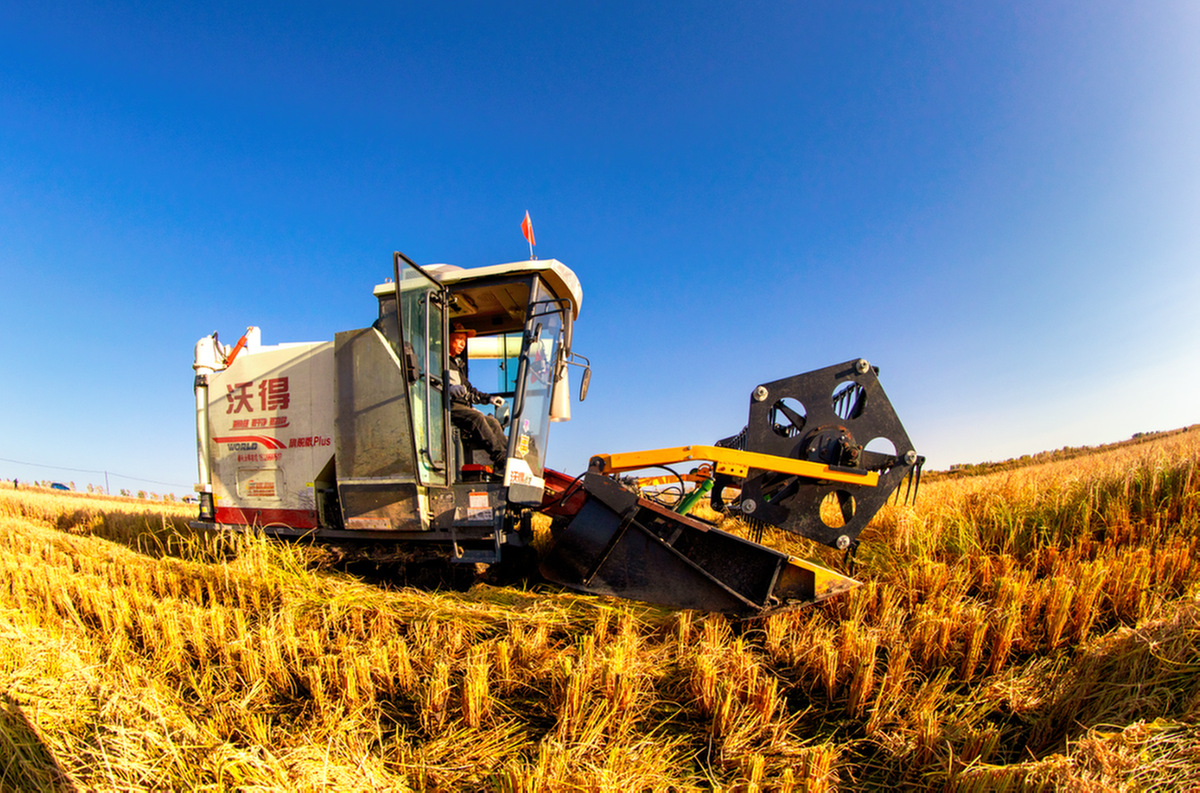
An agricultural machine harvests rice on the Tailai Farm in Heilongjiang province. [Photo by Feng Xian/For chinadaily.com.cn]


Nhận xét
Đăng nhận xét